
Checking Criminal History in Navarro County
Begin with the record that can answer the question. The Navarro County Sheriff's Office roster gateway addresses current county custody. Filed felonies belong with the District Clerk, while Class A and B misdemeanor files belong with the County Clerk. Municipal and justice courts keep fine-only matters. The Texas Department of Public Safety adds reported public conviction and deferred-adjudication information, but it does not replace the court file. A name, date of birth, event date, case or report number, and known arresting agency can separate a true match from a similar name.
The Navarro County government page shows the courthouse and nearby justice offices that anchor this split system.
The courthouse view is useful because Navarro County does not operate one all-purpose criminal-record counter. Use a short sequence that preserves the difference between custody, accusations, filed cases, and final outcomes.
- Check the official jail roster or call the sheriff when present custody is the issue.
- Identify the offense level and search the correct clerk channel with a full legal name and date range.
- Ask for the charging instrument, docket, judgment, and sentence instead of relying on an index alone.
- Use DPS public CCH for reported Texas conviction and deferred results, or fingerprint review for your own identity-matched record.
- Resolve conflicts through the office that created the source and obtain a certified disposition when proof is needed.
Navarro Criminal Records Split Three Ways
A common Navarro County search error is choosing the wrong court. The 13th District Court is the county's only general-jurisdiction district court. Its felony files are handled by the District Clerk in Suite 201 at the Navarro County Courthouse. The County Clerk's criminal department in Suite 101 handles Class A and B misdemeanors. Fine-only Class C charges and ordinance cases remain with the municipal or justice court that received them. Older misdemeanor records can require extra care because the County Clerk identifies computerized coverage from 1995 forward.
The Navarro County justice-court directory identifies four precinct courts and publishes criminal and pretrial docket material.
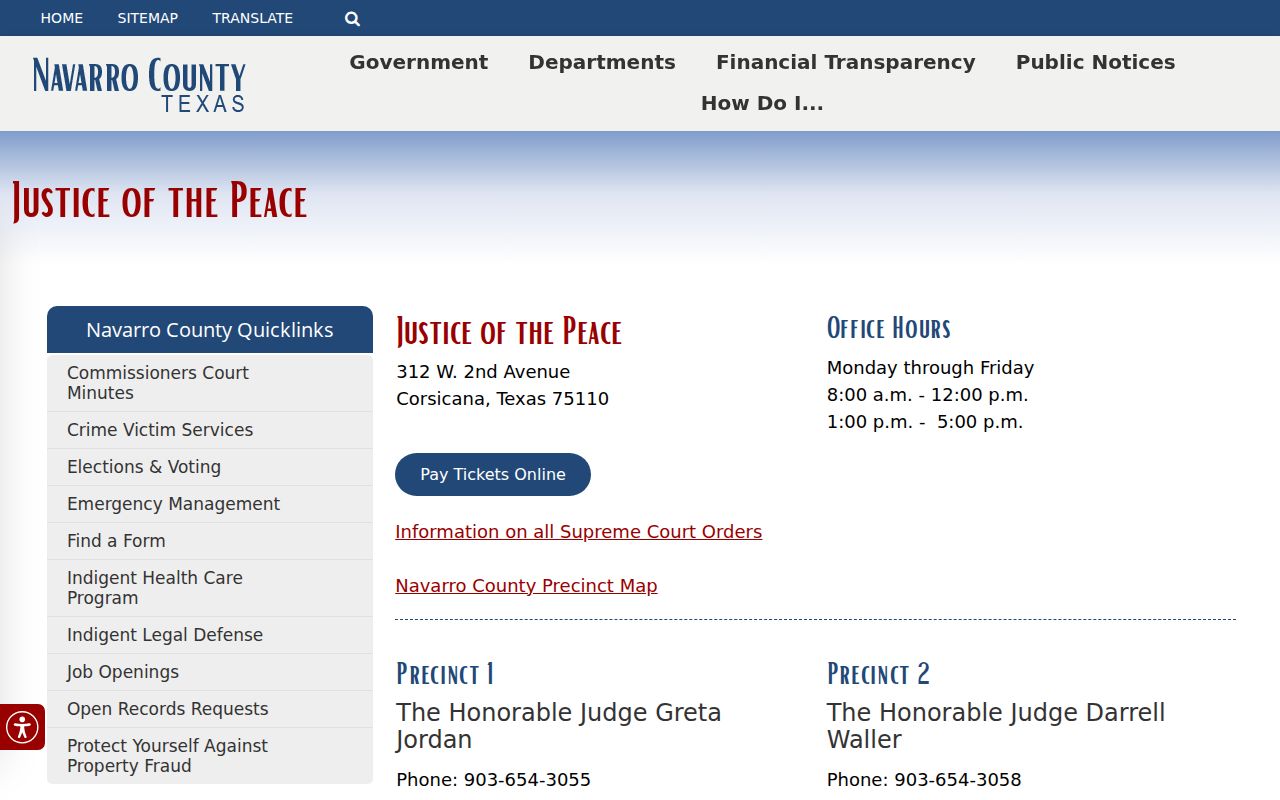
Those dockets explain why a clean result at the two courthouse clerks may still leave a fine-only case elsewhere. The practical routing rule is simple: felony to District Clerk, Class A or B misdemeanor to County Clerk, and Class C or ordinance matter to the issuing municipal or JP court.
District Clerk
300 W. 3rd Avenue, Suite 201
Corsicana, TX 75110
903-654-3040
Weekdays, 8 a.m. to 5 p.m.
County Clerk Criminal Desk
300 W. 3rd Avenue, Suite 101
Corsicana, TX 75110
903-654-3035
8 a.m. to noon and 1 to 4:30 p.m.
Sheriff Records
312 W. 2nd Avenue
Corsicana, TX 75110
903-654-3001
Written request required
Texas Official Background Checks
The Texas Department of Public Safety, Crime Records Division, maintains the statewide Computerized Criminal History system. Its public conviction name search is available to any member of the public after account setup and purchase of search credits. Each online query uses one $1 credit, even when it returns no match. DPS describes public results as conviction and deferred-adjudication information reported by Texas criminal-justice agencies. An offline DPS name check costs $10. Name searches can return close or phonetic matches, so identifiers and the originating Navarro County judgment still need review.
The DPS criminal-history guidance page explains the credit system and result logic.
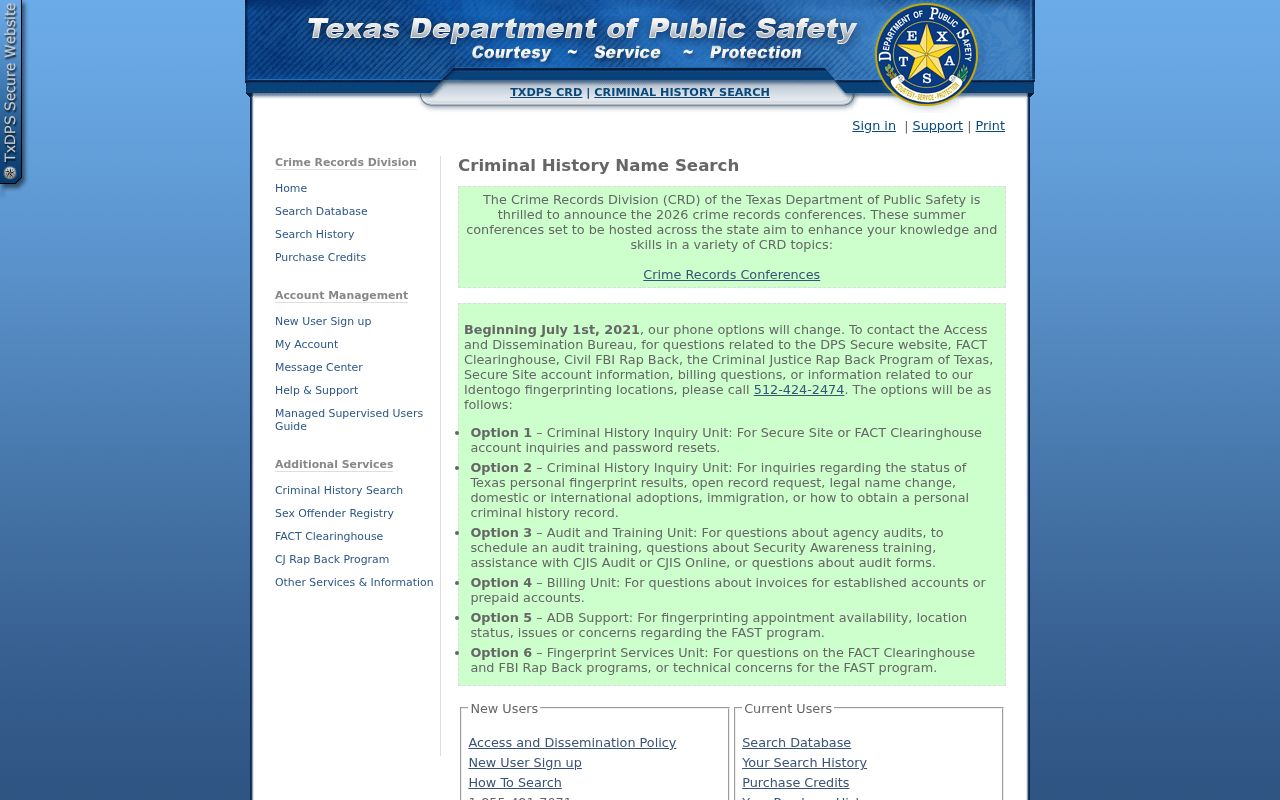
The interface is a statewide public-name product, not a certified Navarro County case file and not a fingerprint identity confirmation. For a personal record review, DPS uses Fingerprint Applicant Services of Texas through IdentoGO. The state lists $15 for the record check and $10 for electronic fingerprint capture. Two hard cards cost $20. Processing is approximately ten business days after receipt, apart from postal time.
Appointments begin through the authorized FAST and IdentoGO enrollment page or by calling 1-888-467-2080.
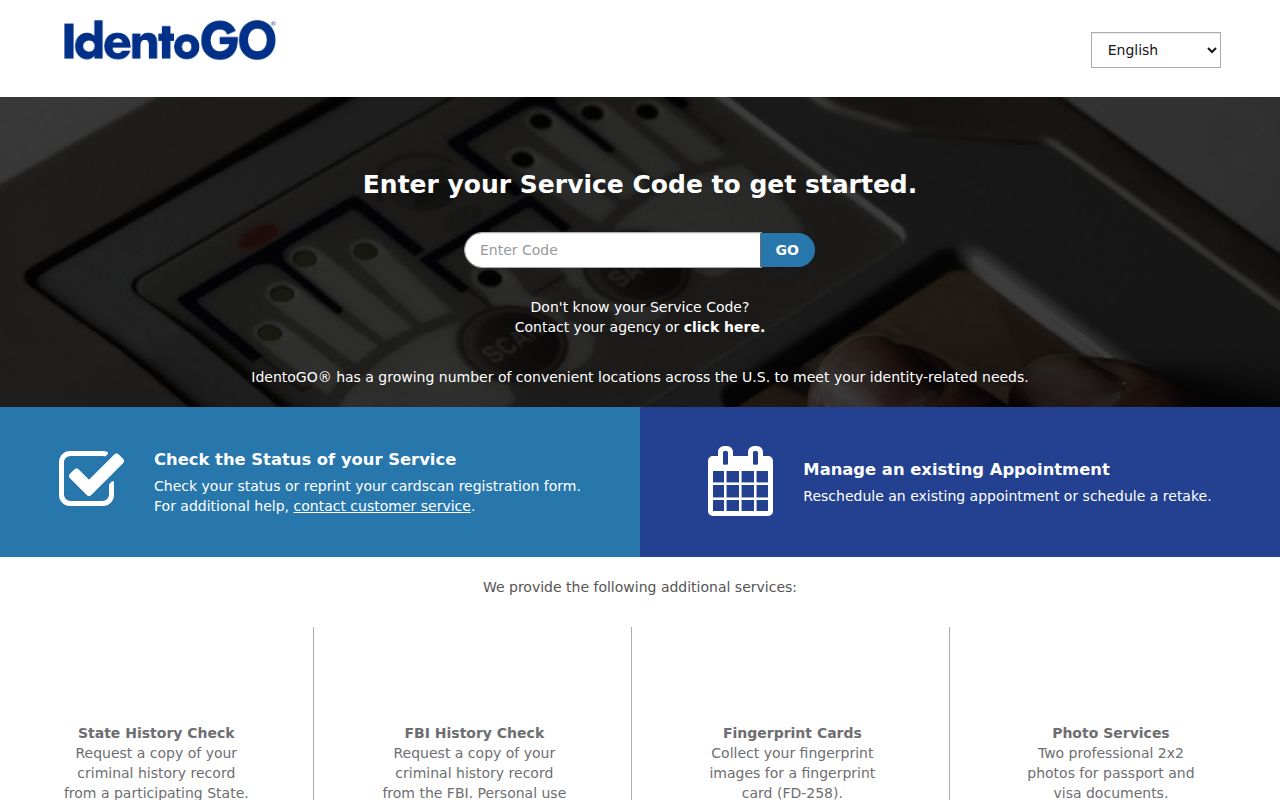
The appointment screen asks for the correct service code or reason, legal identity data, contact details, identification document, and site selection. Readers reviewing their own history should use the purpose supplied by DPS or the authorized requesting agency, never a guessed service code.
How Navarro Arrest Records Reach DPS
One incident produces several distinct records. An officer writes the offense or arrest report. Navarro County jail staff create a booking entry. A prosecutor then may decline the matter, file a misdemeanor information, or seek a felony indictment. Once filed, the clerk builds the case docket and preserves orders, judgment, sentence, and financial activity. For Class B misdemeanors and more serious reportable offenses, fingerprint and arrest-event data move to DPS under a transaction control number. Later prosecution and disposition reports are meant to join that arrest cycle.
The official Navarro County Sheriff's Office site is the starting point for sheriff-created reports and the live custody route.
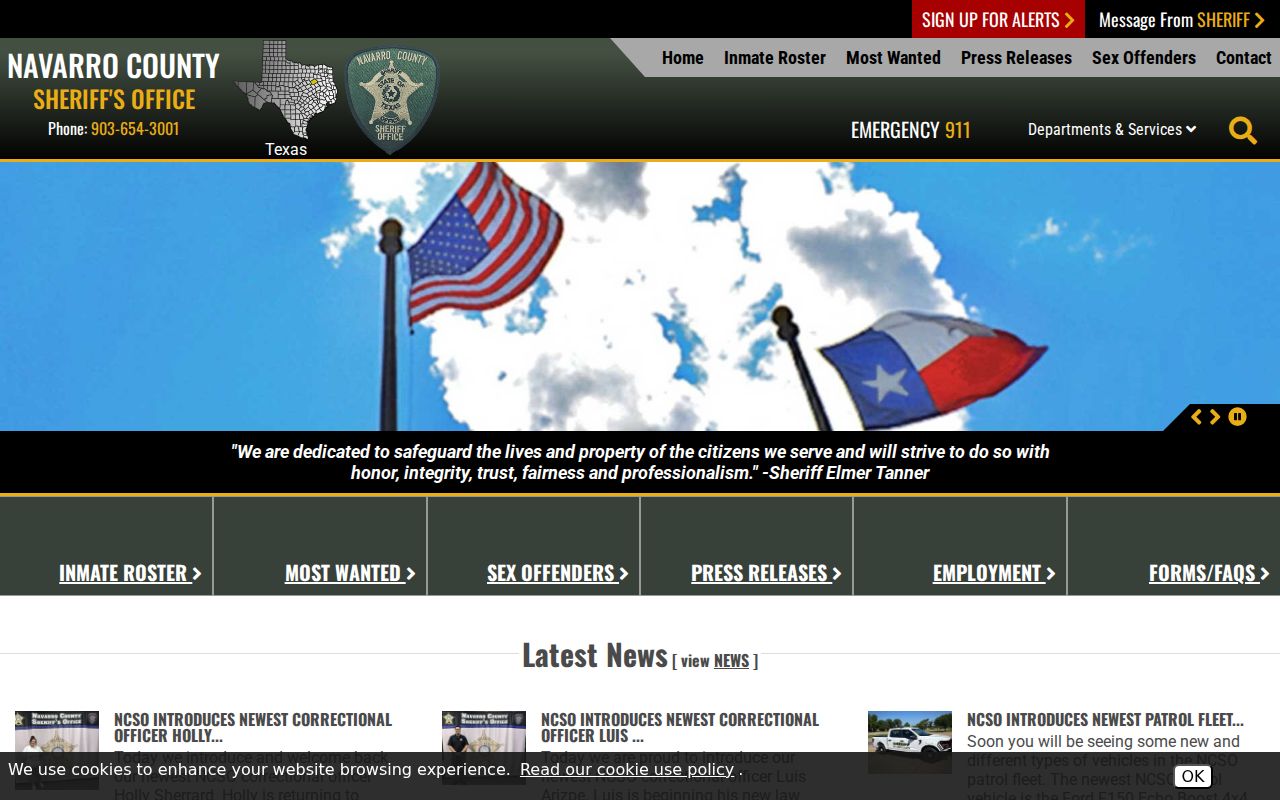
This handoff can create a timing gap. A booking charge may change before filing, and a court outcome may not yet appear in DPS. The court judgment controls the outcome of that Navarro County case. DPS asks for a certified court disposition when a personal review shows that a reported event lacks its result.
Record flow: Arresting agency › Navarro County jail › prosecutor and court clerk › Texas DPS Crime Records Division.
Criminal Record Types
Navarro County agencies create records at different moments. An incident report explains what an officer documented. A booking record shows jail intake and current or past custody. A charging instrument states what a prosecutor filed, while the docket and judgment show how the court treated each count. DPS CCH joins reportable Texas arrest cycles to submitted outcomes. Warrants and capiases are court process, probation is county community supervision, parole is state release supervision, and registry data is a separate public-safety system.
Choosing the source is more reliable than asking one office for a broad background report. Navarro County Sheriff does not publish a dependable countywide background-check product. Its records staff handle specific sheriff documents. Court clerks supply case records. DPS supplies the public statewide name search and fingerprint personal review.
- Incident and arrest report: request it from the officer's agency, not automatically from the jail.
- Booking record: use the NCSO roster, phone line, or a focused written request.
- Court case file: select the felony, misdemeanor, municipal, or JP clerk by charge level.
- State criminal history: use DPS CCH for public outcomes or fingerprints for your own exact match.
- Custody and supervision: distinguish the county jail, TDCJ prison, probation, parole, and registry systems.
Navarro Criminal Records by Written Request
The Navarro County Sheriff's Office requires its public-record requests in writing. Send the completed description to NCSO Records by email or fax at records@ncsotx.org or 903-654-3044. A requester may also deliver the writing to 312 W. 2nd Avenue. The sheriff expressly says not to use its tips and information portal for a records request. No general report-copy fee is published, so ask for a cost estimate instead of assuming a price.
A useful request names an incident or case number when known, date, location, involved people, desired record, and preferred medium. Body-worn-camera requests have special Texas requirements. They must state the date and approximate time, the specific location, and the name of at least one known subject. NCSO uses a dedicated body-camera form. The office may release public portions, redact protected facts, seek clarification or a deposit, or ask the Texas Attorney General to authorize withholding.
| Navarro channel | Best use | Fallback |
|---|---|---|
| NCSO roster or 903-654-3001 | Current jail custody | Written booking-sheet request |
| NCSO email, fax, or counter | Sheriff incident, arrest, booking, CAD, or video record | Clarify dates, location, and format |
| City police records route | Report created by a city officer | Call the city clerk or records unit |
| County court clerks | Filed charge, docket, judgment, certified disposition | Visit the correct counter |
| DPS CCH or FAST | Reported statewide outcome or personal fingerprint review | DPS Error Resolution with certified disposition |
Inside a Navarro County Criminal Record
A name alone is not enough to interpret a Navarro County record. Match the source, number, dates, court, and status. A booking profile may show a booked allegation and bond while the later court file shows a different filed charge. The word “disposed” only means that an outcome exists. It does not state whether the result was a conviction, dismissal, acquittal, deferred adjudication, or another resolution. Obtain the judgment or disposition when the distinction matters.
| Name and identifiers | Legal name and available date-of-birth or agency identifiers used to distinguish people. |
|---|---|
| Arrest and booking data | Agency, event time, booking number, booked charges, bond, and custody or release status. |
| Charges and statutes | Alleged offense at arrest and the complaint, information, or indictment actually filed. |
| Disposition | The result for each charge, such as conviction, dismissal, acquittal, no bill, or deferred adjudication. |
| Sentence | Confinement, fine, restitution, and community-supervision terms in the public order. |
| Custody or supervision | County custody, TDCJ status, court supervision, or parole information from the proper system. |
Protected information should not appear in a public index. Social Security numbers, victim and minor details, sensitive medical facts, juvenile material, sealed or expunged content, and active-investigation details may be restricted. A missing result can also reflect spelling, old archives, a lagging submission, or the wrong clerk rather than proof that no record exists.
Navarro Supervision Records Need Context
Community supervision is Texas terminology for court-ordered probation-like oversight. Navarro County Adult Probation and Community Supervision and Corrections operates at 800 N. Main Street, Suite 301, in Corsicana. It is open weekdays from 8 a.m. to noon and 1 to 5 p.m., with a published phone number of 903-654-3065. The sentence or deferred-adjudication order in the court file is the best public source for the legal terms. Officer assignments, testing, treatment, and sensitive supervision notes should not be assumed public.
The Navarro County CSCD page confirms the local probation office and its contact route.
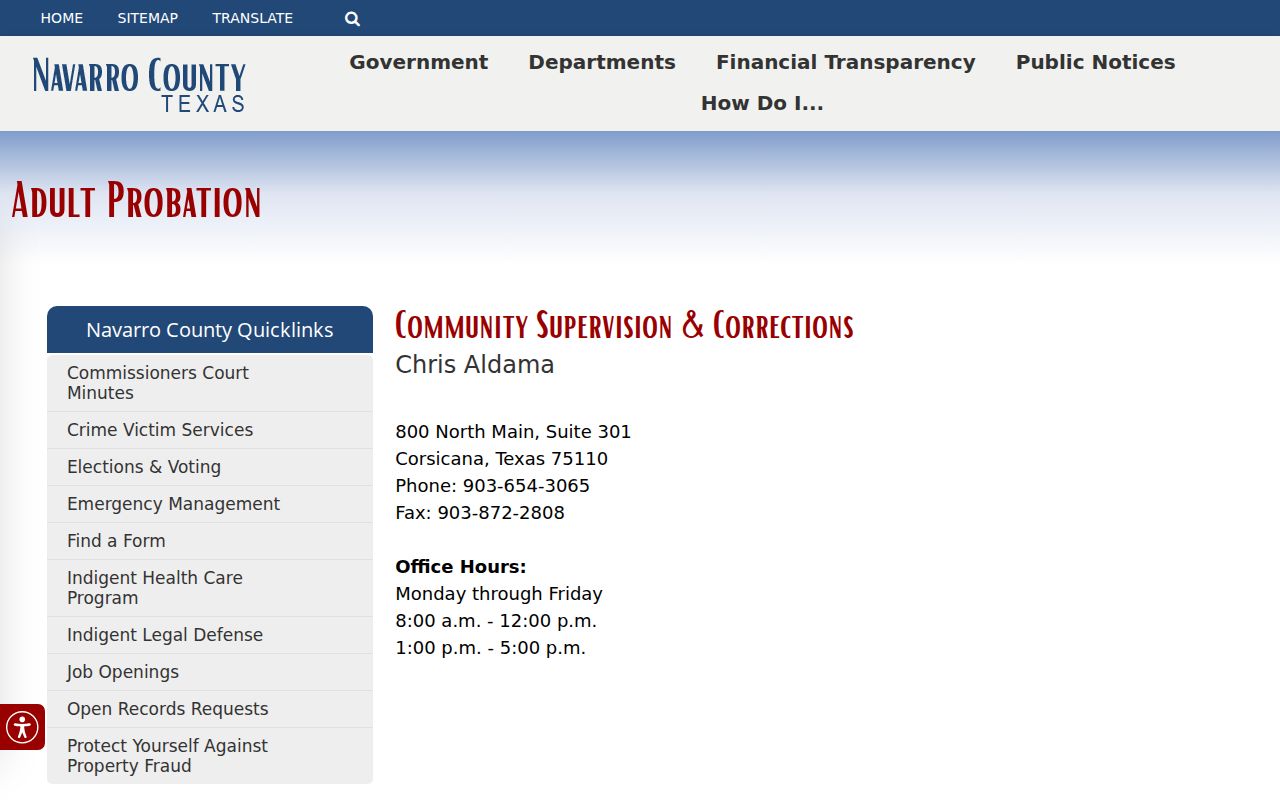
Parole is different. The Texas Board of Pardons and Paroles handles decision functions, and the TDCJ Parole Division administers field supervision. A claimed violation may lead to a motion, warrant, hearing, continuation, change, adjudication, or confinement. The allegation alone does not prove the outcome. Follow it through the Navarro County court file or the appropriate state record.
Note: Verify the court order first, then use CSCD for county procedure and TDCJ for state-release status.
Public Access Laws in Texas
The Texas Public Information Act governs recorded information held by executive agencies, subject to exceptions. It is the main route for Navarro County sheriff and city police records. Court case files follow judicial access law and court rules, so sending a TPIA request is not a universal substitute for asking the clerk. Law-enforcement information may be withheld or redacted when release would interfere with an investigation, expose protected victim or juvenile details, or meet another legal exception.
Traffic crashes have their own official access path. The TxDOT CRIS purchase system searches reports using crash facts and agency identifiers when known.
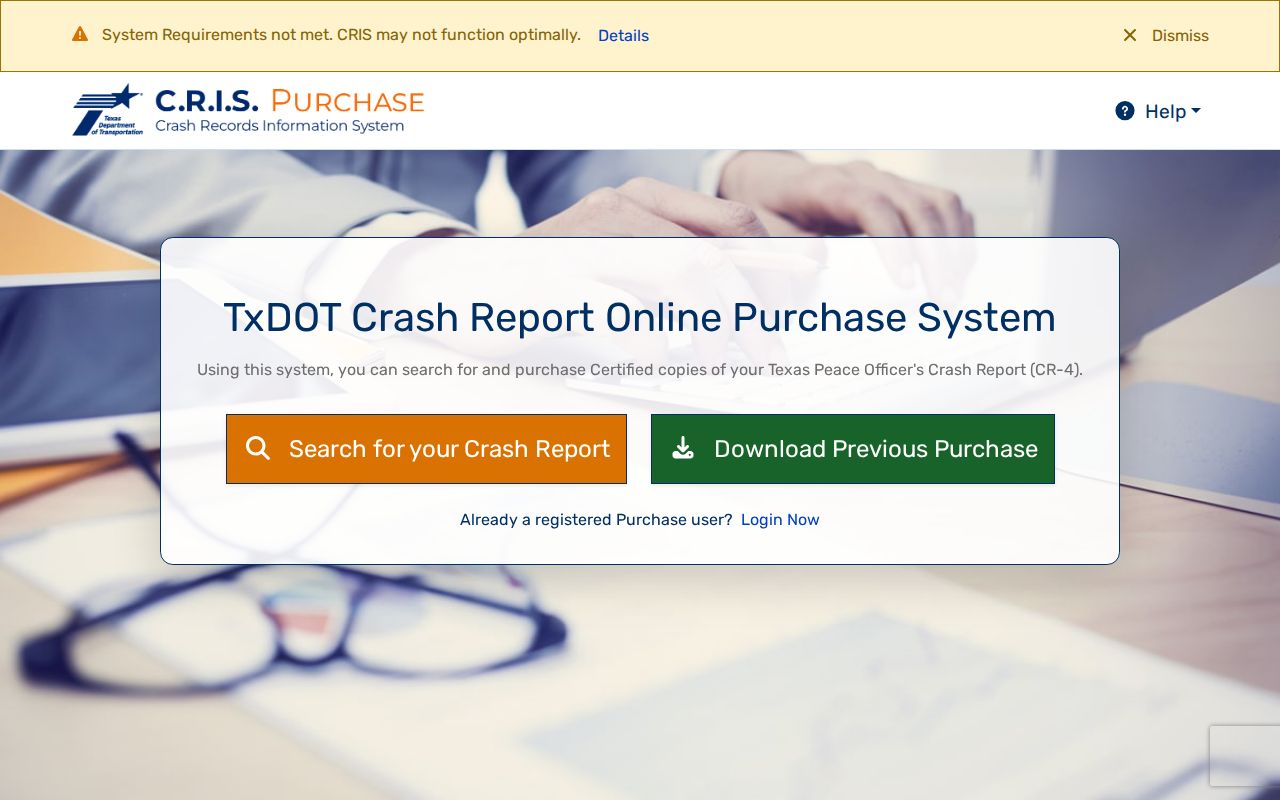
The CRIS screen reinforces the source rule: request a trooper crash from the state channel, and direct a city or sheriff incident record to the agency that created it. The fee is shown during the live transaction and should not be guessed in advance.
Key Texas laws:
Government Code Chapter 552 gives the public a right to recorded government information, subject to stated exceptions.
Government Code Sections 411.083 and 411.135 protect criminal-history information except for access that Texas law authorizes, including designated public outcomes.
Code of Criminal Procedure Chapter 55A controls Texas expunction eligibility, process, and effect.
Code of Criminal Procedure Chapter 62 establishes registration and public-registry duties while withholding listed sensitive fields.
Navarro Warrant Records Have No Master List
No verified comprehensive Navarro County online warrant database was found in the official sources. The jail roster is not a warrant list, and a most-wanted notice would not be complete. For a possible sheriff warrant, call 903-654-3001 and submit a focused written request. For a case-linked capias, contact the District or County Clerk. Failure-to-appear and fine-only process may remain with Corsicana, Kerens, or Rice Municipal Court or one of Navarro County's four JP courts.
Ask the issuing court for the cause number, charge, bond or appearance direction, and current status. A capias is a court command to arrest. A capias pro fine concerns enforcement of an existing fine judgment and remains subject to ability-to-pay procedure. Some warrants or indictments may be sealed, and juvenile process will not be publicly confirmed. After resolving your own warrant, keep the receipt or signed recall order because an electronic system can lag.
- Arrest warrant
- Process based on probable cause that directs law enforcement to take a person into custody.
- Capias
- A court order to arrest, often tied to a filed charge or failure to obey a court direction.
- Capias pro fine
- Process used to bring a person before court concerning an unpaid judgment and ability to pay.
- Disposition
- The legal outcome of a charge, which must be read separately from any warrant event.
Sealed, Expunged, and Restricted Records
Texas expunction and an order of nondisclosure are different remedies. Expunction is the stronger result and applies only to qualifying statutory categories, which may include certain acquittals, pardons, dismissals, no-bills, and identity or mistake situations. A nondisclosure order limits ordinary public release of eligible case information but does not destroy it and permits access by agencies named in law. Juvenile files, victim-identifying facts, active-investigation details, sealed warrant material, and sensitive personal identifiers also may be restricted without either remedy.
Navarro County petition filing begins with the authorized district court and the District Clerk at 300 W. 3rd Avenue, Suite 201. The current expunction filing fee was not located in an official county schedule, so request a civil filing quote. A petition usually needs identity and contact details, arrest date, agency, charge, cause number, disposition, statutory basis, and every agency believed to hold the record. Eligibility can turn on the full arrest episode, filing history, limitation period, and supervision history.
After an order, keep certified copies. Later, check the Navarro County clerk index and obtain a fingerprint DPS personal review. A missing disposition calls for a certified court disposition through DPS Error Resolution. An entry that should have been expunged should be addressed with the signed order and the reporting agency, not an unauthenticated commercial result.
Navarro Diversion Creates Distinct Records
The Navarro County District Attorney publishes documents for Recovery Court and Pretrial Diversion. Recovery Court begins with a nomination form, followed by program-specific materials when a person is accepted. Pretrial Diversion has its own agreement and paperwork. Neither program name is a disposition by itself. To understand the legal result, read the filed case, court orders, and final judgment rather than guessing from a program reference.
The Navarro County District Attorney page is the primary source for these local program forms and current disclosure materials.
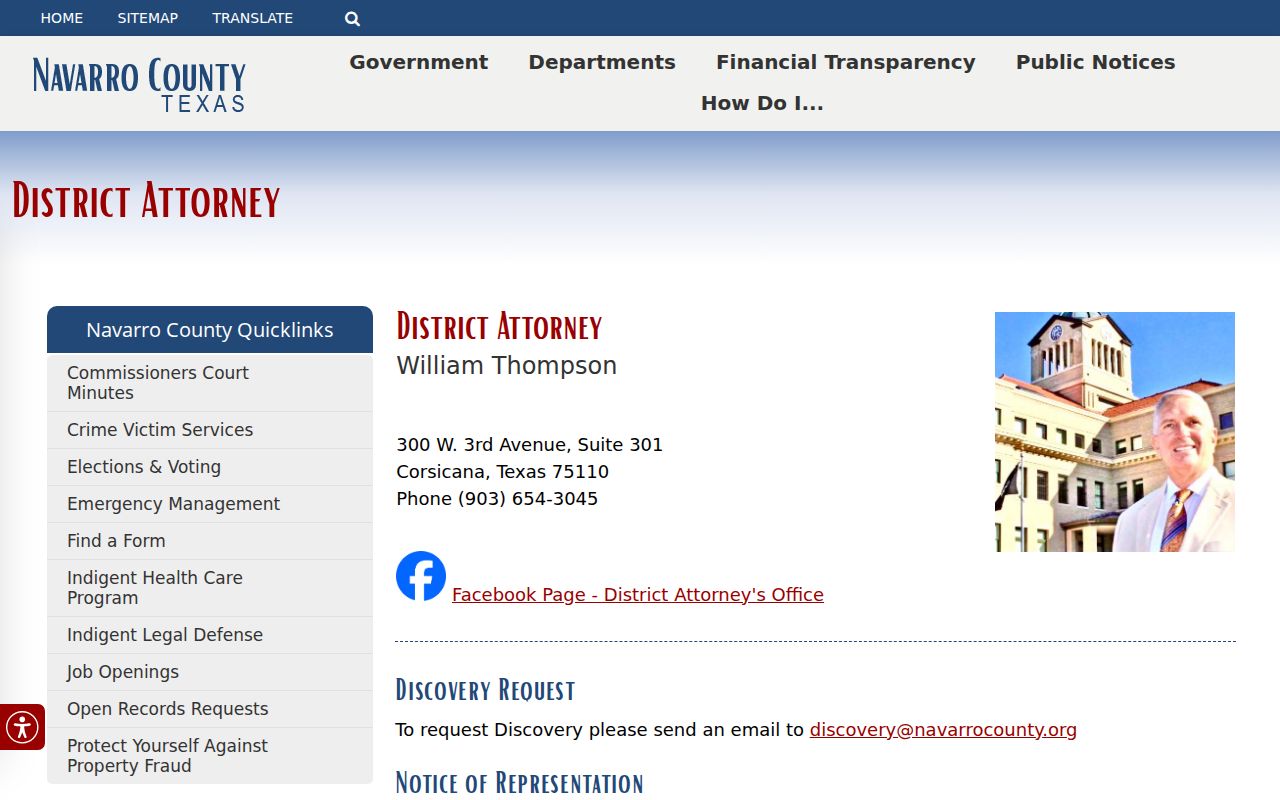
The office view connects these programs to the same courthouse record path. District Attorney files may include confidential work product, victim material, and discovery that is not a public clerk file. Public case events and orders should be requested from the proper court custodian. Program eligibility should never be inferred from a charge label alone.
Navarro County Criminal Records by City
City police departments create their own incident and arrest reports, even when Navarro County later handles the booking or prosecution. Corsicana has a staffed police records unit and online request choices. Kerens uses a written city route and direct municipal-court contact. Rice likewise relies on its police or city office and court clerk rather than a public person-name database. Each local page keeps city procedure at the center while routing county custody and higher-level cases to Corsicana.
Corsicana Criminal Records
23,770 residents in the 2020 Census. Police Records and Municipal Court share the 200 N. 12th Street hub.
Kerens Criminal Records
1,505 residents in the 2020 Census. Written city requests and court email or phone are the key fallbacks.
Rice Criminal Records
1,275 residents in the 2020 Census. Police and Municipal Court routes begin at 305 N. Dallas Street.
Population is used only to identify the three required city pages. It is not a crime rate or a safety score. In every city, the officer's agency controls the local report while NCSO controls the county booking and the correct court controls the filed case.
Navarro Custody Records Cross Systems
A person can disappear from the Navarro County roster because of release or transfer. The NCSO gateway and phone line cover current local detention. The TDCJ Inmate Information Search covers sentenced state custody after transfer. Texas VINE supplies custody-status and notification services. Federal custody belongs in a fourth system.
The official Federal Bureau of Prisons locator searches by name or federal register, DCDC, FBI, or INS number.
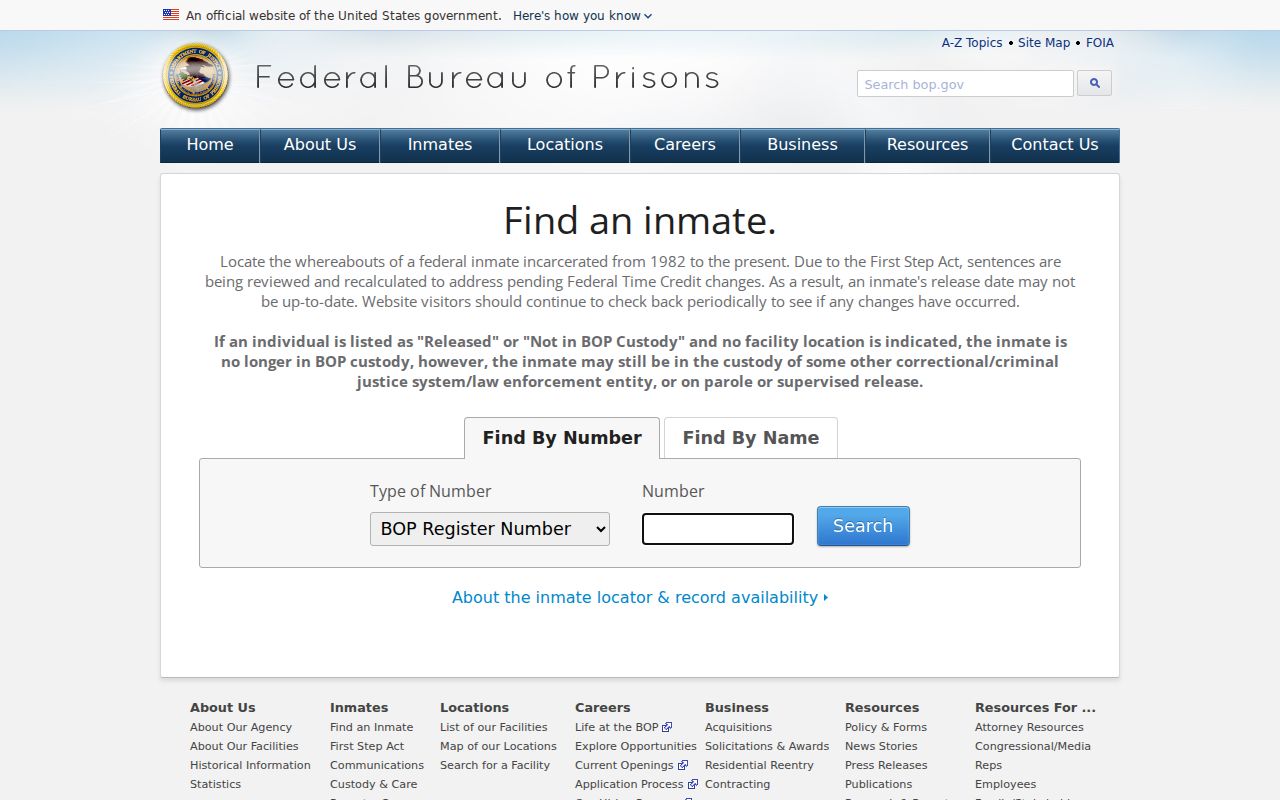
The federal screen should not be used as a substitute for the county or state source. Navarro County lies in the Northern District of Texas, and PACER is the official federal docket route. A federal warrant is not expected in a county warrant list. Matching the custody system to the sentence or charging authority prevents a “no result” from becoming a false conclusion.
Navarro County's 1,009.70 square miles and major I-45, U.S. 287, State Highway 31, and State Highway 22 corridors also create overlapping police jurisdiction. Identify the officer's agency before requesting a report. The nearest courthouse is not necessarily the record custodian.