
Sex Offender Checks in Navarro County
The Texas Public Sex Offender Registry is the first official channel for a Navarro County search. Texas Department of Public Safety, or DPS, publishes the statewide interface at no cost. It can be searched by a person's name or by geography. A county filter gives a broad view, while an address, city, ZIP code, or map path can help with a more focused safety question. Because the data comes from local registering authorities, a material question about a current address or compliance status should go back to the police department or sheriff that holds the registration.
The National Sex Offender Public Website, or NSOPW, is the official federal layer when a search crosses state lines. It sends queries across participating jurisdictions rather than replacing the Texas record. For a person believed to live in Navarro County, read the DPS profile first and use NSOPW as a second route. Neither tool should be treated as a private investigation service or a way to predict future conduct.
The official DPS registry search interface shows how Navarro County names and place filters enter the statewide system.
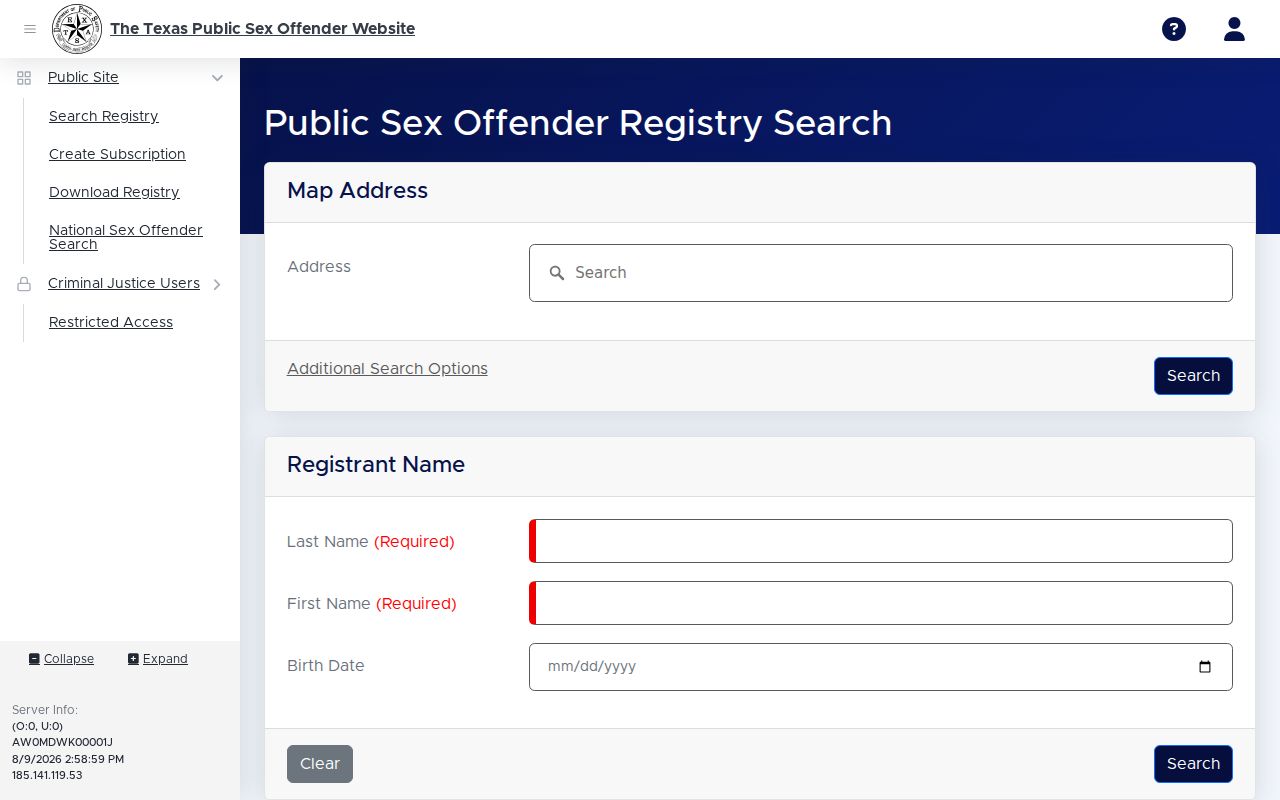
The form makes it possible to start broad, then use confirmed details to narrow a possible match.
How to Search the Texas Public Sex Offender Registry
Begin with the least amount of data that answers the question, then narrow with facts you can verify. Similar names, old addresses, and a recent move can produce a misleading first impression. DPS offers several search paths, so a missed name result does not always settle whether a nearby address has a listed registrant.
- Open the official DPS registry and choose the name or geographic search path that fits the question.
- For a broad local check, select Navarro County. For a known person, enter the surname first and add a first or middle name only as needed.
- Review the list or map and compare name, physical descriptors, age, address, and other listed identifiers. Do not match from a photo alone.
- Open the full profile. Read the offense, conviction date, registration status, and update or verification information before drawing a conclusion.
- For an interstate question, repeat the search through NSOPW. Send an apparent error or noncompliance issue to the responsible police agency, NCSO, or DPS.
The live portal controls exact options, and its radius choices can change. The documented fields are:
| Field | Control | When Used | Search Note |
|---|---|---|---|
| Search type | Tab or choice | One path | Name, address, higher education, or offered map/list route |
| Last name | Text | Name path | Try a verified spelling variant if needed |
| First and middle name | Text | Optional | Useful for narrowing a common surname |
| Address | Text | Geographic path | Supports a place-based proximity search |
| City, county, ZIP | Text or selection | Optional or path-based | Select Navarro for a countywide result |
| Radius | Selection | Address path | Use only the options shown by the live form |
Navarro County Registry Address Lag
A registry address is a reported fact, not a guarantee that nothing has changed since the last update. Texas law imposes duties to report address and certain online-status changes within set deadlines, but the public screen still depends on reports moving from the registrant and local authority to DPS. Read the profile's status and date fields together. An old date, a geographic residence description, or a mismatch with known facts calls for verification, not an in-person inquiry.
For an apparent Navarro County problem, save the public profile link or its identifying number and describe the mismatch to the registering authority. Corsicana, Kerens, Rice, or NCSO can route the concern based on residence. DPS Sex Offender Registration may be reached at 512-424-2800. Use 911 only for an emergency. Do not follow, confront, photograph, or contact a person to test whether the entry is current.
Note: A delayed address update is a reason to call an official office, not proof that a listed person violated a duty.
Inside a Registry Profile
A Texas public profile joins identifying facts with registration and offense details. The screen may include a state profile identifier, aliases, status, and physical marks when supplied. Match several fields. A recent color photo can help, but age, birth information, size, hair and eye color, address, offense data, and the date of the profile provide a safer basis for distinguishing two people with similar names.
The DPS registry profile interface also illustrates how public fields are grouped without centering a private individual.
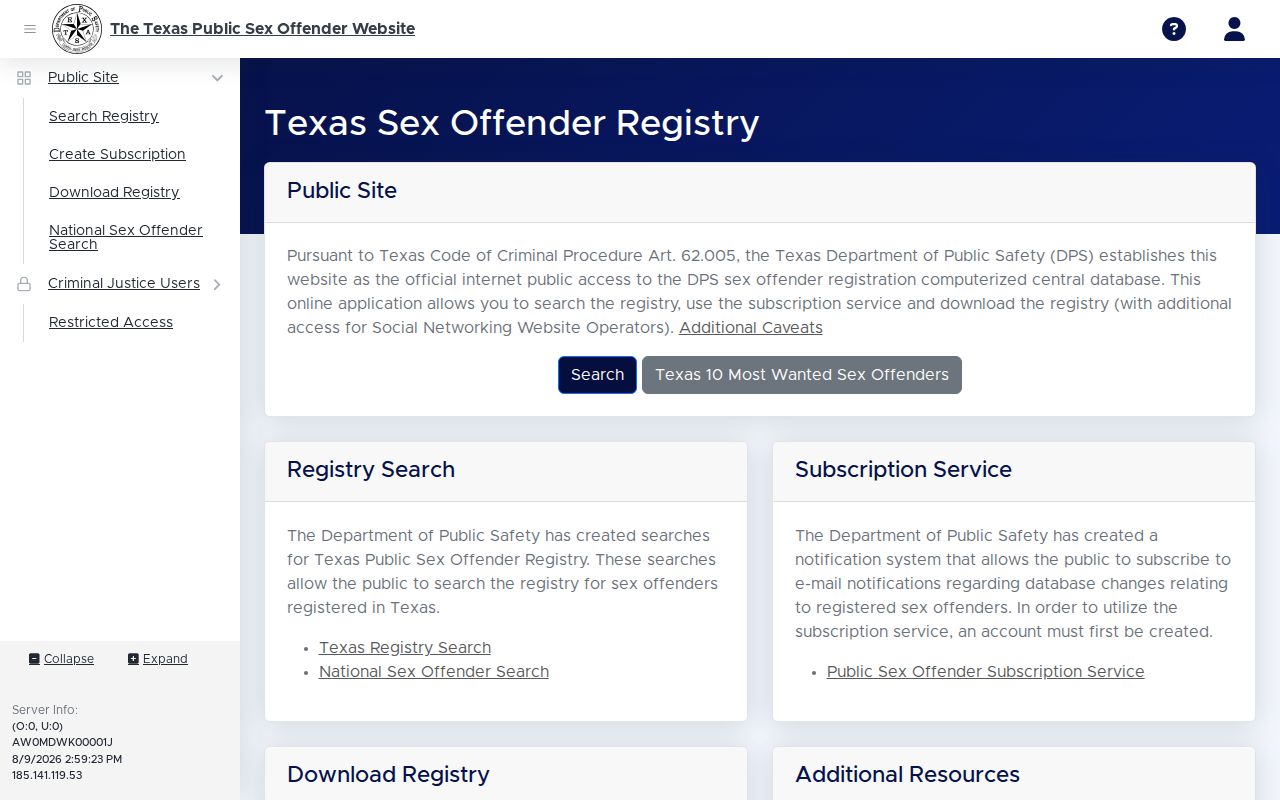
Those field groups help separate identity, residence, offense, and status facts before any local follow-up.
| Name and aliases | Reported legal name and other names tied to the registration record. |
|---|---|
| Photo and description | Recent color photo, sex, race, height, weight, hair, eye color, age or date of birth, and possibly physical marks. |
| Residence | Street address or a geographic description when a standard street address does not apply. |
| Offense facts | Qualifying offense, conviction date, punishment, and victim age category without victim identity. |
| Status and dates | Registration or verification information supplied through the responsible authority. |
| Other public fields | Higher-education status and, for specified trafficking offenses, defined vehicle information. |
Protected Navarro County Registry Fields
Public access has firm limits. The public profile does not disclose a Social Security number, driver's-license number, home or work phone, cell phone, online identifier, employer name or contact data, extra DPS-only material, or facts that identify a victim. Those limits reduce identity theft risks and protect people who are not the subject of the registration duty. A missing field should not be treated as an oversight or filled from an unofficial people-search service.
- Geographic description
- A public description of where someone lives when a normal street address is not used.
- Registering authority
- The sheriff or municipal police authority that receives and verifies local registration information.
- Victim age category
- A limited offense-related category that does not reveal a victim's name or other identifying facts.
- Nonpublic juvenile registration
- A juvenile court may order a juvenile registration record withheld from public display.
Texas law deliberately separates the data needed for public awareness from sensitive state-only data. The official Navarro County route respects that boundary.
Texas Registration Levels and Requirements
Texas does not use a simple public Tier I, Tier II, and Tier III risk label like the common federal shorthand. Duration turns on the qualifying offense and the specific part of Code of Criminal Procedure Chapter 62. Verification frequency can also differ for certain statutory categories. Read the actual profile and confirm the duty with the registering authority. Do not infer a level from the offense name.
| Texas category | Public duration rule | Visibility and verification |
|---|---|---|
| Article 62.101(a) listed offenses | Duty generally ends at death | Public unless a specific legal restriction applies; frequency depends on statute |
| Certain transferred juvenile causes | Ten years after the latest qualifying release, discharge, or dismissal event | Use the profile and authority for the actual schedule |
| Other covered adult conviction or deferred categories | Ten years after the latest dismissal, discharge, or release event | Public registry duties apply for the statutory period |
| Juvenile adjudication | Ten years after disposition or completion, whichever is later | A juvenile court can order registration nonpublic |
A Texas deferred adjudication can still trigger a registration duty when Chapter 62 says it does. The duration table is only a framework. The judgment, statute, release history, and any later court order control a specific Navarro County registration.
Cross-State Registry Checks for Navarro County
NSOPW is useful when a name or past address points beyond Texas. The U.S. Department of Justice service searches participating state, territorial, and tribal public registries and routes the reader to the source jurisdiction. It does not turn different state rules into one national tier system. Search the Texas DPS portal for Navarro County detail, then use NSOPW to see whether another participating jurisdiction returns a public match.
The official NSOPW search service shows the national layer used for this cross-state check.
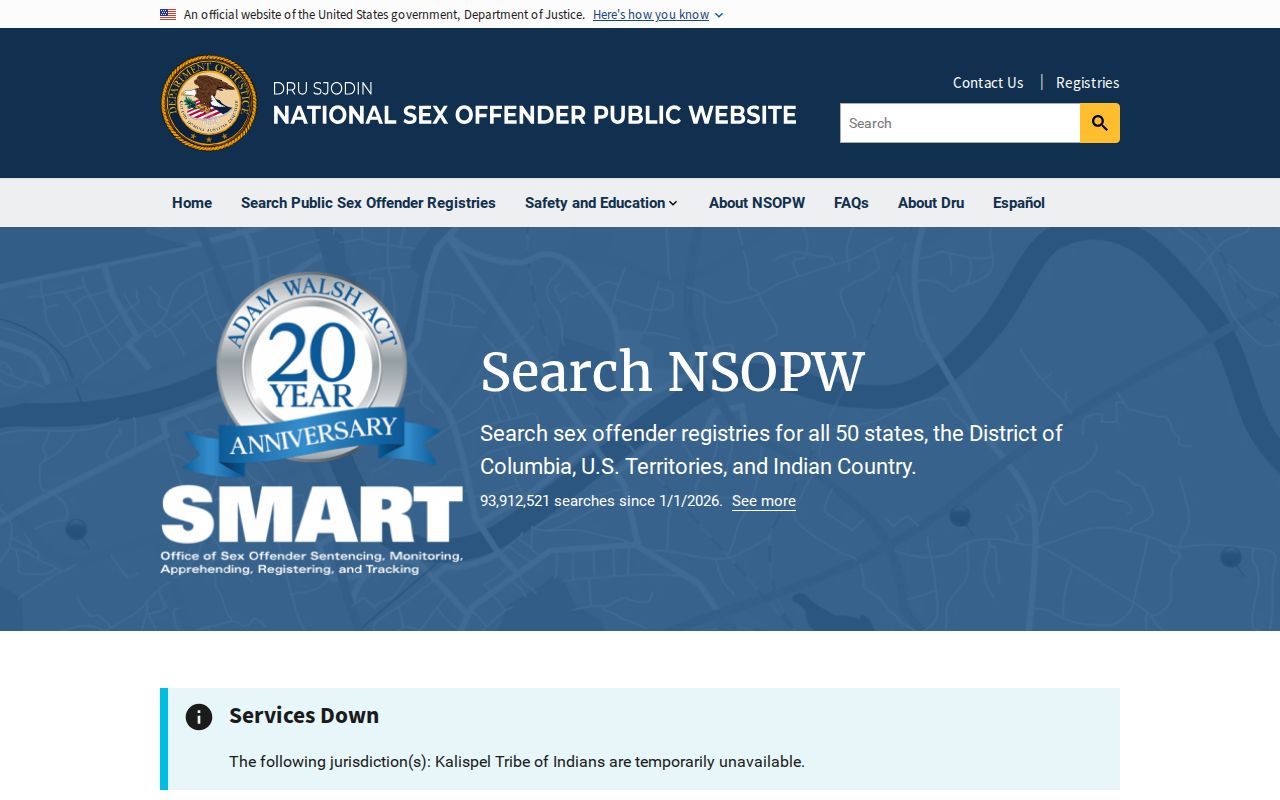
The national interface is best used as a second source, with each result verified in the jurisdiction that supplied it.
If Texas and another jurisdiction appear to conflict, compare update dates and call the office shown on the source profile. A move, release, or change in duty can reach systems at different times. A no-result response from one database does not erase a sourced result from another.
Navarro County Registry Notification
DPS may mail community notification postcards when a high-risk registrant or a civilly committed sexually violent predator enters a community. Local authorities may use other forms of publication that Texas law permits, and schools can receive required notice. Those notices are separate from a user's on-demand county or address search. No official Navarro County email or proximity-alert signup was established in the research, so the state portal and local authority remain the verified channels.
Community notice gives residents facts for practical safety plans. Read the cited profile, confirm the address through official channels if it matters, and share only accurate public-source information. Do not repost protected data, attach claims that are not in the record, or turn the notice into a call for contact or surveillance.
Community Notification and Lawful Use
The registry exists for personal, family, and community awareness. Texas Code of Criminal Procedure Chapter 62 sets the registration and public database framework. It does not authorize trespass, threats, intimidation, stalking, violence, or a private compliance investigation. Send suspected noncompliance to the local agency or DPS and let trained staff verify it.
Misuse Can Be a Crime. Texas Code of Criminal Procedure Chapter 62 authorizes registry access, not threats, harassment, stalking, trespass, or harm. Such acts may be prosecuted under applicable Texas criminal statutes. Use registry information only for lawful awareness and report concerns through police or DPS.
A Navarro County registry entry should also be read in context. It identifies a legal registration record and public facts selected by law. It does not grant permission to contact a listed person, and it does not prove a new offense. For broader county record context, the Navarro County criminal history overview explains how official records are separated among police, courts, and state systems.